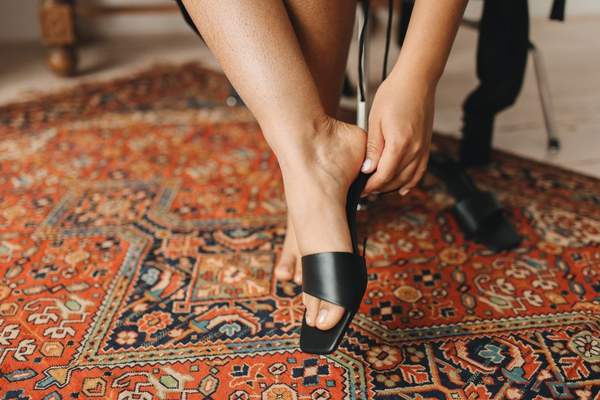
A pair of heels can feel promising when you first slip them on, then become uncomfortable before you have left the house. A little too much movement at the back, pressure across the toes or a footbed that does not match your arch can make each step harder. So how should heels fit? They should hold your foot securely without squeezing it, give your toes space and feel stable when you walk, not just when you stand still.
The three places to check before you buy
Heel fit is a balance between space at the front, grip at the back and support underneath. A shoe can pass one test and fail another. Your usual UK size is a starting point, but shape matters just as much.
Toes: room without sliding forward
Your toes should lie comfortably rather than curl, overlap or press against a hard edge. Toe room in heels is especially important because the raised position shifts more weight towards the front of your foot. In a pointed court shoe, the decorative tip should extend beyond your toes; they should not be forced into that narrow point.
Check width and depth as well as length. If the sides pinch your little toe or the upper presses on your toenails, going up a size may create a loose heel. A wider toe box is usually better. With open-toe heels, your toes should not hang over the footbed.
Heel: a secure hold without rubbing
The back of a closed heel should sit comfortably against your foot, without persistent gaping or slipping as you walk. You should not need to grip the shoe with your toes. Equally, the back should not dig into your skin or press painfully against your Achilles tendon.
For slingbacks, the strap should stay in place without cutting into your heel. An adjustable ankle strap can improve security, but it cannot rescue the wrong shoe shape.
Arch and ball of foot: support in the right place
Your foot should sit naturally along the shoe’s curve. If the arch feels unsupported or the ball of your foot lands beyond the widest part of the sole, the shoe may not match your proportions. Shift your weight from one foot to the other. You should feel balanced, not pitched forward onto your toes.
Signs your heels are too tight or too big
Heels too tight can cause pinching, numbness, hot spots or pressure on the toenails. Do not assume painful shoes will stretch into the perfect fit. Some materials soften, but the shoe’s length and basic shape will not change enough to correct a serious mismatch.
Heels too big can be just as frustrating. Look for a gap behind the heel, your foot sliding towards the toe, or a slapping sound as the shoe lifts away. If you shorten your stride or curl your toes to hold the shoe on, you need a more secure fit.
Pressure at the front with a loose back often suggests a shape or width problem rather than a straightforward sizing issue.
A practical UK heel sizing guide
UK shoe sizes are useful labels, not guarantees of identical fit across brands. Two pairs marked UK 5 may differ in width, toe shape, heel cup and arch position. Try your usual size and, where available, the neighbouring half size. Compare both while standing and walking rather than choosing by the number alone.
Have both feet measured if it has been a while. One foot may be slightly larger, and foot shape can change over time. Fit the larger foot first, then check whether the smaller foot stays secure. Shop later in the day if your feet swell, and wear the tights or hosiery you expect to use.
A guide to measuring your feet at home can help you find a starting point, but the final decision still comes down to a walking test.
The five-minute fitting test that reveals problems
Imagine trying on heels for a wedding. They feel fine while you look in the mirror, but you will also queue, cross a car park, climb steps and dance. Recreate some of those movements before removing any labels.
Stand with your weight evenly distributed and check whether your toes are cramped. Walk across a clean, level floor at your normal pace. Turn around, stop, start again and take a few shorter steps. Notice heel lift, toe pressure and any wobbling. Then stand still for a minute and check for growing pressure beneath the ball of your foot.
Test both shoes together. A pair that feels stable during careful steps may behave differently when you move naturally. If you buy online, follow the retailer’s return rules and trial the shoes indoors on a clean surface.
Different heel styles need different checks
With stilettos, the narrow heel base makes stability especially important. A lower or wider block heel generally offers a steadier platform, although fit still matters. Platforms can reduce the angle felt by your foot, but a thick platform may affect how naturally the sole bends.
Pointed-toe pumps need usable space before the tapered tip. Strappy sandals must keep the foot centred without bands cutting across the toes or instep. Backless mules provide less heel retention, making them less suitable for long walks. Guidance on choosing a comfortable heel height is a useful next step.
Can insoles or heel grips fix a poor fit?
A thin heel grip or forefoot pad may improve a pair that is only slightly loose, provided it does not crowd your toes or alter your balance. Repeat the walking test with the insert. If your foot still slides or the upper pinches, exchange the shoes rather than adding more padding.
For regular wear, lower heels, a stable base and secure fastenings are kinder choices for many feet. If you experience persistent pain, numbness or rubbing, stop wearing the pair and seek advice from a podiatrist. A guide to preventing shoe blisters may also help.
Frequently asked questions
Should heels fit tighter than trainers?
They may feel more closely fitted around the heel and midfoot, but they should not pinch. Secure does not mean squeezing your toes or ignoring pain.
Is a little heel slipping normal?
Minor movement can happen with certain designs, but noticeable lifting, rubbing or needing to claw your toes to retain the shoe suggests a poor fit.
Should I size up in pointed heels?
Not automatically. Choose a toe box that accommodates your foot. Sizing up can create instability if the heel becomes loose.
How much space should there be at the toes?
Your longest toe should not press against the end and all toes should rest naturally. No single visible gap works for every high-heel shape, especially pointed designs.
The right fit should feel secure, not restrictive
Good heels do not demand constant adjustments. Your toes have breathing space, your heel stays comfortably in place and your foot sits securely on the sole. Prioritise how the shoes behave when you move over the size printed inside them. If they hurt in the fitting room, they are unlikely to feel better after a full evening.