Why School Shoes Matter More Than We Think
Choosing the best school shoes for kids sounds simple at first. A black pair, a neat shape, something that matches the uniform, and the job is done. But any parent who has watched a child run across the playground, drag their feet through the corridor, or come home with scuffed toes after one week knows there is more to it.
School shoes are not just part of a uniform. They are part of a child’s everyday comfort. Kids wear them for long hours, often longer than they wear any other pair of shoes. They walk to class, climb stairs, sit cross-legged, line up in the playground, and sometimes treat their shoes as if they were made for football, even when they clearly were not. That is why the right pair needs to balance comfort, durability, support, and school-friendly style.
The best school shoes for kids are the ones that can survive a full school day without causing sore feet, slipping off, or falling apart before the term is over. They should look smart enough for school rules, but practical enough for real childhood.
Comfort Comes First in Everyday School Shoes
Children may not always explain discomfort clearly. Instead of saying their shoes feel tight around the toes, they may simply refuse to wear them. They may walk strangely, complain halfway through the morning, or come home with red marks on their feet. This is why comfort should be the first thing to consider.
A good school shoe should have enough room at the front for the toes to move naturally. It should not press against the sides of the foot or rub around the heel. Children’s feet grow quickly, but buying shoes that are too large can be just as uncomfortable as buying shoes that are too small. Oversized shoes may slip, cause blisters, or make a child trip while walking or running.
Soft inner padding can make a big difference, especially for younger children who are still getting used to structured footwear. A cushioned insole helps absorb impact during busy school days. At the same time, the shoe should not feel too heavy. A bulky pair may look strong, but if it makes walking tiring, it will not be practical for daily wear.
The Right Fit for Growing Feet
Fit is one of the most important details when choosing school shoes. Children’s feet are still developing, so shoes should support natural movement rather than restrict it. A well-fitting shoe gives the foot enough space while still holding it securely in place.
It is worth checking the length, width, and heel fit. Some children have narrow feet, while others need a wider shape. A shoe that fits well in length but squeezes across the front can still be uncomfortable. Likewise, a shoe that is wide enough but loose at the heel may rub or slip during walking.
Parents often leave a little growing room, which makes sense, but it should be moderate. Too much extra space can make the shoe unstable. A thumb’s width at the front is a common guide, though the overall feel matters too. Children should be able to walk naturally when trying shoes on, not shuffle or curl their toes to keep them in place.
It is also helpful to shop for school shoes later in the day, when feet may be slightly more expanded from walking. This gives a more realistic idea of how the shoes will feel during a long school day.
Materials That Handle Real School Life
School shoes go through a lot. They meet wet pavements, dusty playgrounds, classroom floors, lunch spills, and the occasional mystery scuff that nobody can explain. Because of this, material matters.
Leather is often a strong choice because it is durable, breathable, and can soften over time. It usually handles daily wear well and can often be polished to look fresh again. Synthetic materials can also work, especially when they are flexible and easy to clean, though some may not breathe as well as natural materials.
For children who are hard on their shoes, reinforced toes can be useful. The toe area is usually the first place to show damage, especially if a child kneels, kicks stones, or uses shoes as brakes on the playground. A sturdy sole is also important. It should bend enough for comfort but still provide protection and grip.
Water resistance is another practical detail. School mornings do not always come with dry weather. Shoes that can handle a little rain or damp ground are much easier to live with, especially during colder months.
Smart Style Without Losing Practicality
School shoes usually need to follow uniform rules, but that does not mean every pair has to look the same. Some schools prefer plain black shoes, while others allow subtle details. The best choice is usually simple, neat, and easy to match with trousers, skirts, dresses, or shorts.
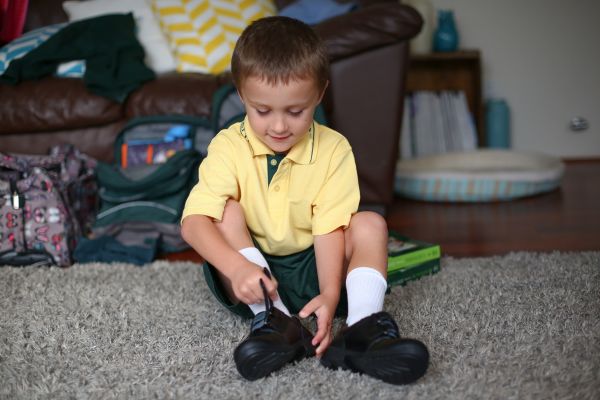
Classic lace-up shoes can look smart and traditional, but they may not be ideal for younger children who cannot tie laces confidently. Velcro straps are practical for early school years because they allow children to put shoes on and take them off independently. Buckle styles can look polished, though they may take a little more time. Slip-on shoes can work for older children, but they need to fit securely so they do not slide off during active moments.
The key is to choose a style that suits the child’s age, school routine, and level of independence. A beautiful pair that takes ten minutes to fasten every morning can quickly become frustrating. A simpler pair that a child can manage alone often makes school mornings smoother for everyone.
Support for Active School Days
Children are rarely still for long. Even during a normal school day, their feet are constantly working. Good support helps keep them comfortable from morning assembly to the final bell.
A supportive school shoe should hold the heel properly and provide a stable base. The sole should not be completely flat and flimsy. Some flexibility is good, but the shoe should not twist too easily in every direction. A firm heel counter can help keep the foot aligned, especially for children who walk heavily or roll their feet inward.
Arch support may also be important, depending on the child’s foot shape. Not every child needs strong arch support, but shoes that feel too flat may become uncomfortable after several hours. If a child often complains of tired feet or leg discomfort, it may be worth paying closer attention to shoe structure and fit.
Good grip is another small detail that matters a lot. School corridors and playground surfaces can be slippery, especially in rainy weather. A non-slip sole helps children move confidently without constantly sliding around.
Durability Is Not Just About Thick Soles
Many parents look for durability because school shoes can be expensive, and no one wants to replace them every few weeks. But durability is not only about choosing the thickest, toughest-looking pair.
A durable shoe should have strong stitching, secure fastenings, and a sole that is properly attached. The material should resist cracking or peeling with regular wear. The shape should hold up after repeated use, rather than collapsing at the sides or heel.
It is also worth thinking about how the child uses their shoes. A child who walks to school every day may need stronger soles than one who travels by car. A child who plays energetically during breaks may need more reinforced areas. Some children are naturally careful with shoes, while others seem to test them like sports equipment. The best school shoes for kids are chosen with the child’s habits in mind, not just the school dress code.
Seasonal Choices for School Shoes
School shoes need to work across different seasons, or at least adapt well to changing weather. In warmer months, breathability becomes more important. Shoes that trap heat can make feet sweaty and uncomfortable. In colder or rainy months, water resistance and thicker soles may matter more.
For autumn and winter, a slightly sturdier shoe can be helpful, especially if the child walks through wet streets or muddy school grounds. In spring and summer, lighter shoes may feel more comfortable, but they should still provide enough protection and support.
Some parents keep one main pair for everyday school wear and another pair for particularly wet days. This is not always necessary, but it can help extend the life of the shoes if weather conditions are rough.
When to Replace School Shoes
Children’s shoes should be checked regularly, not only when they look worn out. Sometimes shoes still look decent on the outside but have become too tight inside. Growing feet can outgrow shoes quietly, and children may not notice until discomfort becomes obvious.
Signs that shoes need replacing include toes pressing against the front, worn-out soles, broken fastenings, leaning heels, or regular complaints of discomfort. If the shoe has lost its shape or support, it may no longer be doing its job, even if it technically still fits.
It is also worth checking socks. Thick school socks can change how shoes fit, especially in winter. A pair that felt fine with thin socks may feel tight with thicker ones.
Helping Kids Choose Sensibly
Children often care about how shoes look, and that is fair. School shoes are something they wear every day, so they should feel happy in them. Still, appearance should not be the only deciding factor.
A useful approach is to offer a few parent-approved options and let the child choose from those. This gives them a sense of control while keeping comfort and practicality in place. Younger children may focus on shiny details or easy fastenings. Older children may want something more stylish or grown-up. The goal is to find a pair that satisfies school rules, feels comfortable, and still suits the child’s personality.
When children like their shoes, they are more likely to wear them properly and take care of them. That small sense of ownership can make a real difference.
Conclusion
Finding the best school shoes for kids is really about understanding how much those shoes have to do in a single day. They need to look neat, feel comfortable, support growing feet, and handle the rough-and-tumble rhythm of school life. A good pair does not have to be flashy or overly complicated. In fact, the most reliable school shoes are often the ones that quietly do their job well.
The right shoes give children freedom to move, learn, play, and get through the day without sore feet or constant adjustments. For parents, they offer a little peace of mind during busy school mornings. When comfort, fit, durability, and simple style come together, school shoes become more than just a uniform requirement. They become part of a child’s everyday confidence.