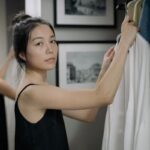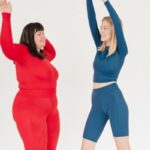
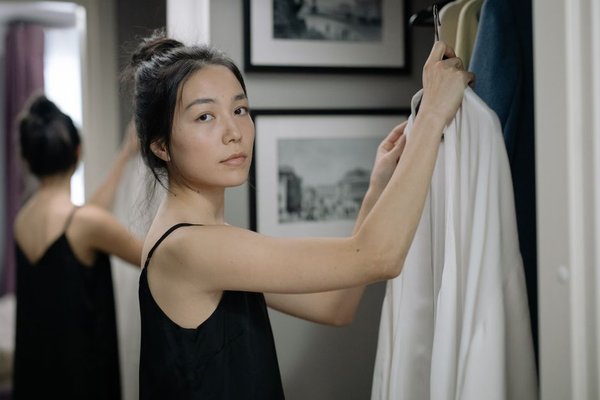
Dressing a petite frame is less about obeying fashion rules and more about understanding where clothes begin, end and interrupt your outline. A jacket that looks cropped on a taller model might reach your hips. A midi skirt might sit closer to your ankles. Neither is automatically wrong; the question is how each piece works with the rest of your outfit.
If you are wondering how to dress a petite frame without relying on heels or fitted clothes, start with three practical choices: garment length, clothing scale and waist placement. Good petite frame styling gives you options rather than telling you what to avoid.
Start with your proportions, not your height alone
Petite usually refers to height rather than dress size. UK petite ranges commonly cater for people around 5ft 3in (160cm) or under, although sizing varies by brand. You can be petite with any body shape. The challenge is often that standard garments place the knee, waist or sleeve at a different position from the one intended.
Some shorter people have relatively long legs and shorter torsos; others have the opposite proportions. Stand in front of a full-length mirror and notice where your outfit creates horizontal breaks. That observation is more helpful than assuming every petite person needs an identical trouser rise or skirt length.
Get your jacket, top and trouser lengths right
Where tops and jackets finish
A waist-length jacket often reveals more of the trousers or skirt beneath it. A longer jacket can look equally balanced when its shoulders fit and its sleeves do not cover your hands. Try wearing an open jacket over a tucked top to keep a visible centre line.
With untucked tops, notice the hem. If it ends at the widest part of your hips, it can form a prominent horizontal line. For a different effect, try a partial tuck or a top that finishes slightly higher. These small adjustments change petite outfit lines without requiring new clothes.
Finding the right hem
Check trouser lengths with the footwear you regularly wear. Straight-leg trousers can finish around the top of the shoe, while wide-leg styles often work when they skim the shoe without dragging. For cropped trousers, compare a hem near the ankle with one stopping halfway down the calf. The difference can be surprisingly noticeable.
Midi skirts and long dresses are not off-limits. Look for a hem that feels deliberate and consider whether the waistline falls where you want it. A side slit or a simpler skirt shape can make heavier fabric feel less dominant, but your personal taste still comes first.
Use waist placement to create balance
High-waisted trousers can give the impression of longer legs, especially with a tucked or cropped top. Yet an extremely high waistband may crowd someone with a shorter torso. If it reaches uncomfortably close to your ribs, try a mid-rise cut rather than forcing the trend.
To test the effect, wear one pair of trousers with a top untucked, fully tucked and loosely tucked at the front. Keep your shoes the same. Which version creates the shape you prefer? The position where top meets bottom often matters more than the garment’s label.
The same thinking applies to dresses. Adjustable tie waists let you change the emphasis. Understanding body proportions and outfit balance can help you decide where that emphasis belongs.
Pay attention to clothing scale
Clothing scale is the relationship between garment details and your frame. Large pockets, wide lapels, deep cuffs and bold prints occupy a greater share of a shorter silhouette. That does not mean you must wear tiny prints or delicate accessories; it means those details deserve a conscious choice.
Picture an oversized blazer with strong shoulders, large patch pockets and extra-long sleeves. All three details compete for attention. Shortening the sleeves while keeping the dramatic shoulders may produce a cleaner result without losing the character of the jacket.
Prints work similarly. A large floral pattern can be striking on a petite frame, particularly when the rest of the outfit is simple. If you love dramatic patterns, let one item lead rather than requiring every item to be visually quiet.
Keep the outfit’s lines clear
One-colour dressing can create continuity, but it is not compulsory. Similar trouser and shoe colours may make the lower half look uninterrupted. An open cardigan or coat can form vertical edges that guide the eye through the outfit.
Contrast is useful too. A bright belt across a dark dress deliberately divides the silhouette; a matching belt creates a softer transition. Neither is inherently more flattering. Choose the effect that suits your outfit and mood.
For relaxed looks, styling oversized clothing is worth exploring: volume is easier to control when you reveal a wrist, ankle or waist and keep the rest of the outfit intentional.
Try a real-world outfit test
Imagine you are 5ft 1in and want to wear navy wide-leg trousers, a white shirt, loafers and a long blazer to work. In the mirror, the outfit feels heavier than expected. Instead of discarding the wide-leg trousers, adjust one element at a time.
First, tuck the shirt to reveal the waistband. Next, fold the blazer sleeves to show your wrists. Finally, check whether the trouser hems rest neatly over your loafers rather than pooling around them. You may discover those changes are enough. If not, try a shorter blazer while keeping everything else the same.
Taking two photos from the same distance can help you compare more fairly. Changing one feature at a time shows whether length, volume or contrast makes the difference.
Make fit and alterations work for you
Petite clothing ranges sometimes adjust more than hems, including waist positions and sleeve lengths. Even so, sizing differs between retailers. Prioritise fit around your shoulders, waist and hips, then assess what can be altered. Shortening trousers is usually simpler than rebuilding a jacket’s shoulders.
Before buying, sit, walk and reach in the garment. A coat that looks ideal while standing may bunch at the waist when you move. Learning how to measure clothes for a better fit can also reduce guesswork when ordering online.
Frequently asked questions
Should petite people always wear high-waisted trousers?
No. A higher rise can visually lengthen your legs, but it may make a shorter torso seem compressed. Choose the rise that feels comfortable and balances your proportions.
Can a petite frame wear oversized clothes?
Yes. Try one generously cut garment alongside a more defined piece, or reveal your wrists and ankles. Pay attention to shoulder fit and the intended length.
Are midi dresses and long coats suitable for shorter people?
Absolutely. Check the hem, waist placement and sleeves. Long, uninterrupted lines can look elegant on a petite build.
Do I need heels to look proportionate?
Not at all. Trainers, loafers and flats work well when you consider trouser length, shoe shape and the overall outfit line.
Let proportion guide your choices
Learning how to dress a petite frame should make your wardrobe feel more flexible. Adjust garment lengths, experiment with waist placement and decide which details deserve attention. Once you understand how petite proportions respond to those choices, you can wear tailored, relaxed or bold outfits on your own terms.